
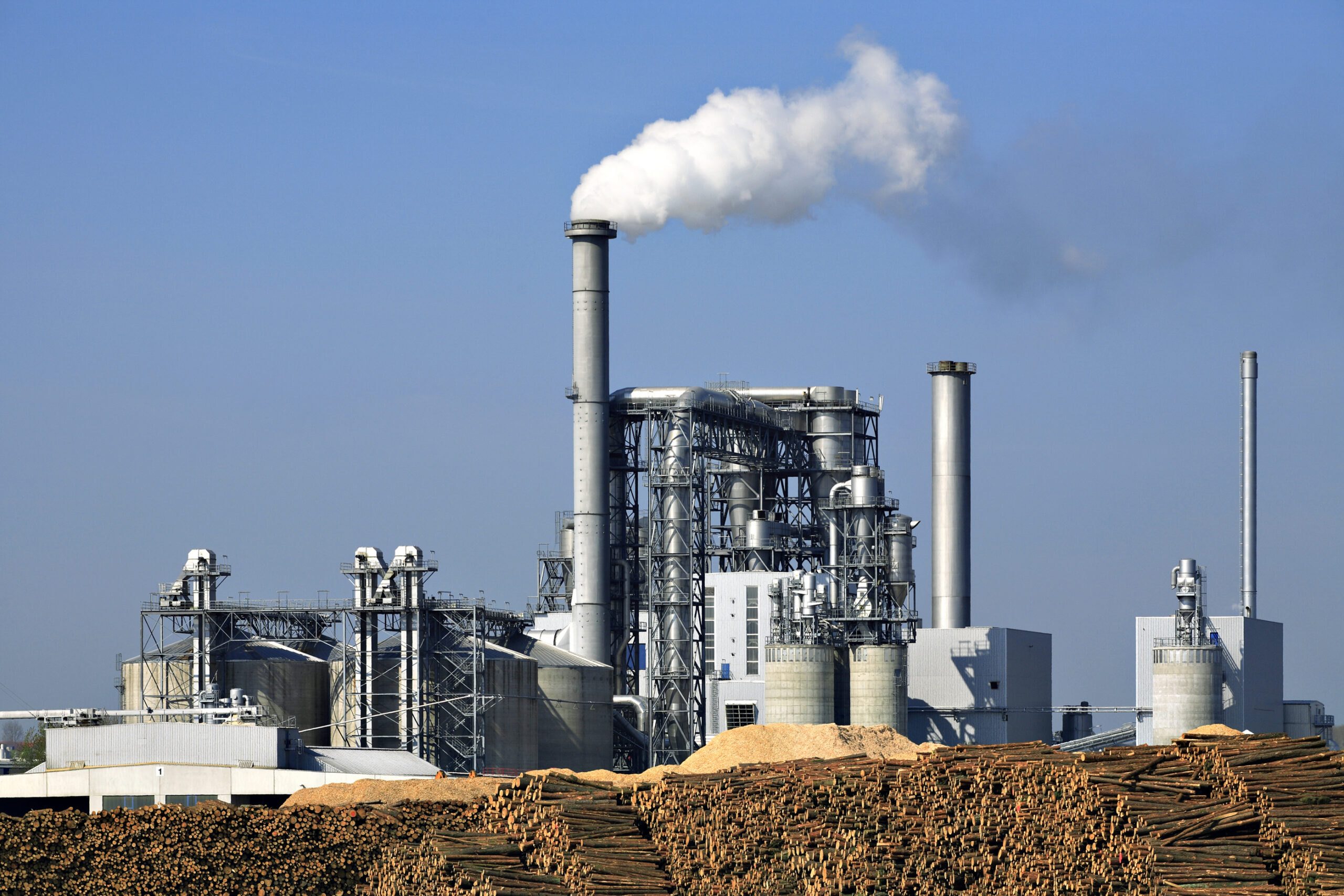
When it comes to industrial airflow systems, even the smallest design decisions can have a significant impact. Shane Glidewell, an air handling expert, explains why choosing between parallel and opposed blades in louver dampers is one of the most overlooked factors, and how that choice can influence efficiency, equipment life, and overall plant performance.
Louver Damper Fundamentals
Louver dampers are tools designed to control or shut off airflow within industrial systems, helping maintain safe, efficient, and reliable operation.
Because of their function, louver dampers can be found anywhere air is moving through an industrial process.
As Glidewell puts it:
“A louver damper is most commonly used in any system that has air moving through it, such as a boiler system at a paper mill or power plant, or a furnace at a steel mill or petrochemical facility.”
In each of these environments, precise airflow control is essential to maintaining process stability and protecting critical equipment.
Selecting the right damper configuration is just as important as the application itself. Choosing the wrong design can affect a system’s ability to regulate temperature, evacuate air, or maintain proper airflow control. Depending on the severity of the issue, improper damper selection can reduce performance, disrupt production, or even result in a complete system shutdown.
Louver dampers play an especially important role in industries such as power generation, steel manufacturing, petrochemical processing, and cement production, where dependable airflow management supports efficient, reliable operation.
As industrial operations have advanced, so has damper technology. In the past, systems relied on manually operated plates to regulate airflow. Today, electronic, pneumatic, and hydraulic controls allow modern louver dampers to provide significantly greater precision and operational safety.
Parallel Blade Dampers
Unlike early single-plate designs, a parallel blade damper uses multiple blades that operate in tandem. As the damper opens or closes, every blade moves in the same direction while remaining parallel throughout the entire motion. Glidewell compares the design to the air registers found in most homes, where each blade opens and closes together to direct airflow. This synchronized movement is what gives the parallel blade damper its name.
Because of this design, parallel blade dampers excel in shutoff applications but are not intended for precise airflow modulation. Since all blades move in the same direction, they direct airflow rather than distributing it evenly, making them less effective for process control. One notable exception is at the inlet of a fan, where the blades pre-spin the air in the direction of the fan’s rotation, improving fan efficiency. This airflow pattern also results in a slightly greater pressure drop than opposed blade dampers.
Environmental conditions such as temperature, static pressure, or the type of fluid moving through the system rarely determine whether a parallel blade damper is appropriate. Instead, the application’s airflow control requirements should drive the decision. A common misconception is that because parallel blade dampers perform well at a fan inlet, they provide the same level of airflow control elsewhere in the system. Glidewell explains that beyond the fan inlet, opposed blade dampers deliver more uniform airflow and better controllability.
Understanding Opposed Blade Dampers
Opposed blade dampers are designed for applications requiring precise airflow modulation. Unlike parallel blade dampers, alternating blade movement distributes airflow evenly across the duct opening, providing greater process stability, more accurate airflow control, and improved efficiency.
Because opposed blade dampers create a balanced airflow pattern rather than directing air in a single direction, they are the preferred choice for certain industrial process control applications. Facilities requiring operators to maintain specific airflow setpoints benefit from the consistent modulation and improved controllability opposed blade designs provide.
Parallel vs. Opposed: Key Differences
Choosing between a parallel and opposed blade damper ultimately depends on how the airflow system is expected to perform. While the two designs may appear similar, their airflow characteristics, controllability, and ideal applications differ significantly.
The biggest performance difference lies in how each damper regulates airflow. Parallel blade dampers open with all blades moving in the same direction, creating a concentrated air stream that makes them well suited for shutoff applications and specialized fan inlet installations. Opposed blade dampers rotate adjacent blades in opposite directions, producing a more uniform airflow pattern with less turbulence. This design provides smoother airflow modulation, more accurate flow control, and improved system balancing throughout a wide operating range. Parallel blade dampers, while effective at fully opening or closing airflow, can create uneven velocity profiles that make fine adjustments more difficult.
System design is often the most important factor influencing damper selection. Rather than choosing a damper based solely on blade configuration, engineers should evaluate the entire airflow system, including airflow requirements, pressure drop, operating temperatures, particulate loading, leakage requirements, and control objectives. According to Glidewell, cost is rarely the deciding factor; long-term system performance and reliability are far more important.
Engineering evaluations also help predict airflow patterns, pressure losses, and system performance before equipment is installed. This allows them to select the configuration that will deliver the most efficient operation while avoiding costly redesigns after installation.
Facilities sometimes ask whether both damper types should be used within the same system. Glidewell explains that while this is possible, it depends entirely on the application. In most systems requiring both shutoff capability and airflow modulation, an opposed blade damper is recommended because it can effectively perform both functions. Parallel blade dampers remain the preferred choice only for dedicated shutoff applications or specialized fan inlet installations where their airflow pattern provides a performance advantage.
One of the most common specification mistakes is assuming that because a parallel blade damper performs well at a fan inlet, it will provide the same level of airflow control throughout the rest of the system. In reality, applying that same configuration elsewhere often results in increased turbulence, reduced controllability, and lower operating efficiency where an opposed blade design would perform better.
Customization is equally important. Industrial airflow systems operate under a wide range of temperatures, pressures, and process conditions, from clean air applications to abrasive dust and material handling environments. Selecting the correct blade configuration is only one part of the design process. Damper size, materials, seals, actuators, and operating requirements should all be tailored to the specific application to maximize performance, reliability, and equipment life.
Industry Applications & Real-World Examples
According to Glidewell, ProcessBarron has replaced numerous parallel blade dampers originally installed for process airflow control with opposed blade designs. In many of these cases, facilities experienced approximately 50% greater operating efficiency simply by selecting the correct damper configuration for the application.
Although parallel blade dampers excel in shutoff applications, opposed blade dampers are generally recommended whenever facilities require continuous airflow control. Glidewell emphasizes that every application should be evaluated individually because airflow objectives, operating temperatures, wear, corrosion, and process conditions all influence the final design.
Power generation facilities are among the industries where proper damper selection is especially critical. Boilers, emissions control equipment, and other factors all rely on stable, precisely controlled airflow to maintain efficiency and reliable operation.
Heavy industrial facilities, including pulp and paper mills, utilities, cement plants, steel manufacturers, and petrochemical operations, often face additional design challenges. High operating temperatures, operating material selection, and individual customer needs all place significant stress on airflow control equipment. Because these conditions vary from one facility to another, Glidewell emphasizes that every application should be evaluated individually rather than relying on a one-size-fits-all approach.
Maintenance, Reliability & Longevity
Maintainability is a key part of longs steel shafts paired with carbon graphite bearings are commonly used because they resist binding and corrosion, particularly when dampers remain idle for extended periods.
By selecting materials appropriate for the operating environment, performing routine inspections, exercising dampers-term damper performance. Glidewell explains that ProcessBarron designs its dampers so bearings, shafts, blades, and linkages can be replaced individually rather than requiring the entire damper to be removed. Temperature, pressure, and fluid movement are also taken into consideration to create an all-inclusive approach that helps reduce repair costs and minimize downtime.
According to Glidewell, the most common failure points are the moving components that allow the damper to operate. Linkages and bearings typically experience wear first, while corrosion and erosion can gradually damage internal components in demanding applications. Facilities may also notice increasing actuator resistance, inconsistent blade movement, excessive leakage, or difficulty maintaining airflow setpoints, which are all indicators that inspection or maintenance may be needed. Glidewell recommends cycling dampers at least once a month, even in infrequently used systems, to keep components moving properly and reduce premature wear.
Sealing systems play an important role in both reliability and performance. Proper seals help control air leakage, maintain process efficiency, and protect internal components from excessive wear caused by dust, moisture, or corrosive process gases. Selecting the appropriate seal for the operating environment helps extend equipment life while ensuring the damper continues to perform as intended over time.
Material selection also plays a significant role in long-term reliability. ProcessBarron evaluates operating temperature, pressure, corrosion potential, wear, and process media before recommending materials. Stainles regularly, and maintaining critical spare parts, facilities can significantly reduce unplanned downtime and extend the service life of their airflow systems. However, when corrosion or erosion compromises the structural integrity of the damper itself, replacement becomes the more practical long-term solution.
Future Trends & Innovations of Dampers
While the fundamental principles behind industrial louver dampers have remained consistent for decades, the technology surrounding them continues to evolve. According to Glidewell, many of today’s advancements focus on smarter actuation systems, improved blade profiles, and increasingly sophisticated electronic and pneumatic controls. These innovations allow facilities to achieve more accurate airflow regulation, faster system response, and greater overall operating efficiency.
Automation is transforming how airflow systems are controlled and maintained. Modern dampers can be integrated with plant control systems, allowing operators to make real-time airflow adjustments based on changing process conditions rather than relying solely on manual intervention. This level of automation improves process consistency, reduces operator workload, and helps maintain optimal system performance across varying operating conditions.
At the same time, many industrial facilities are placing a greater emphasis on energy optimization. Rising operating costs and increasingly stringent environmental regulations have made efficient airflow control a higher priority than ever. Selecting the proper damper configuration, minimizing pressure losses, and maintaining precise airflow setpoints all contribute to lower fan energy consumption and improved overall system efficiency.
Smart monitoring technologies are also improving long-term reliability by giving maintenance teams greater visibility into equipment performance. Continuous monitoring of actuator position, airflow, pressure, and operating conditions allows facilities to identify abnormal trends before they develop into equipment failures. Combined with predictive maintenance strategies, these technologies help reduce unplanned downtime, extend equipment life, and improve overall plant reliability.
When planning future upgrades, Glidewell recommends that facilities evaluate the entire airflow system rather than focusing on individual components. Damper selection should consider process objectives, operating conditions, maintenance requirements, and opportunities for automation alongside traditional factors such as airflow performance and shutoff capability. A well-engineered system that integrates the appropriate damper design with modern controls and monitoring technologies provides the greatest opportunity to improve efficiency, reliability, and long-term operating performance.
Optimize Your Airflow
Selecting the right louver damper involves far more than choosing between two blade configurations. While parallel and opposed blade dampers may appear similar, each is engineered to solve different airflow challenges. Understanding how the system is intended to operate, and selecting the blade configuration that aligns with those objectives, is one of the most important decisions in achieving long-term performance.
As Glidewell explains, effective airflow control directly influences operational efficiency. The proper damper configuration can improve airflow modulation, optimize fan performance, lower energy consumption, and extend equipment life.
Because every industrial application presents unique operating conditions, there is no one-size-fits-all solution. Factors such as airflow requirements, temperature, pressure, corrosion potential, wear, environmental regulations, maintenance expectations, and automation goals all play a role in determining the optimal design, which is why engineering expertise remains essential throughout the specification process. By evaluating the complete airflow system, engineers can recommend solutions that maximize efficiency, reliability, and long-term value.
Selecting the right blade configuration is an important step toward improving overall system performance. With application-specific engineering and the right damper design, facilities can achieve better airflow control, increased energy efficiency, reduced maintenance costs, and reliable long-term operation. Optimize your airflow system with a damper solution designed for your facility’s unique needs. Contact ProcessBarron today for expert guidance from selection through implementation. Handle Everything Better.