
Expert Interview: Danny Stamps, Plant Manager
Host: Jen Little, Director of Commercial Operations
Manufacturing depends on advanced equipment, evolving technology, and efficient processes, but none of it functions without skilled people. As industries across the country face an aging workforce and rapid technological change, developing new talent has become one of the most important priorities for long‑term operational success.
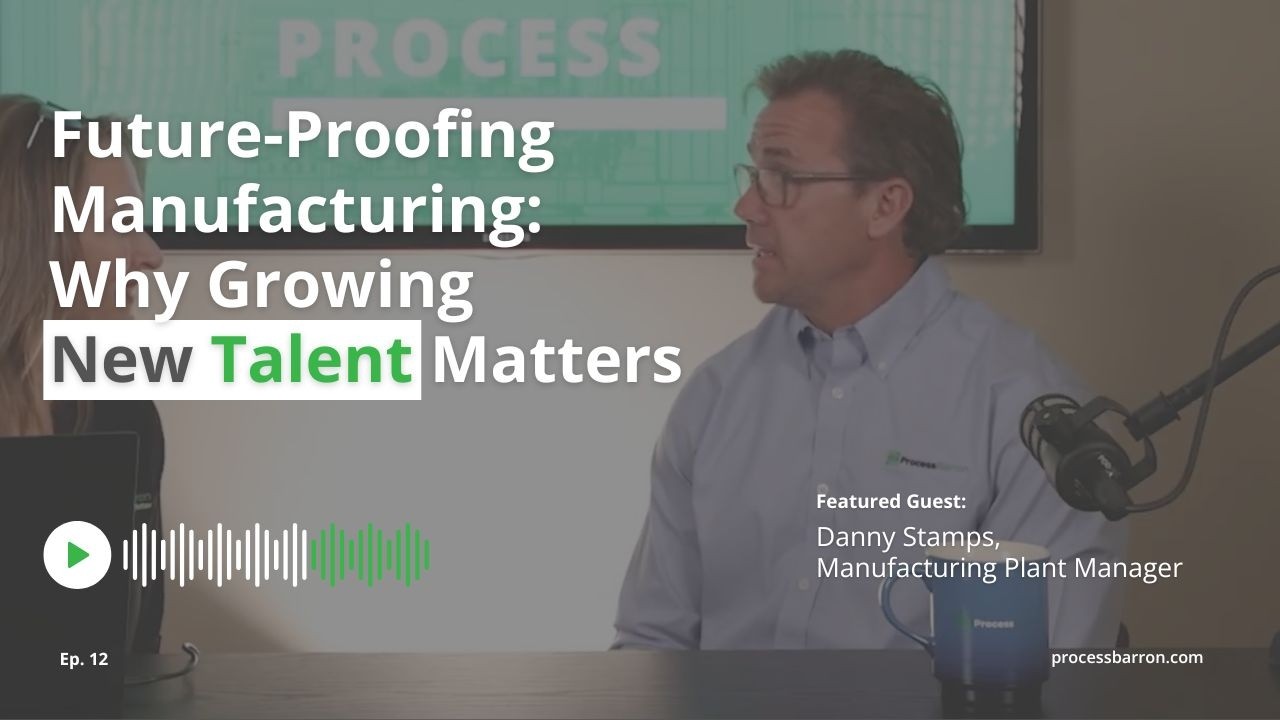
In this episode of Powering the Process, host Jen Little sits down with Danny Stamps, Plant Manager of ProcessBarron’s South Shop, to explore why workforce development matters, the skills shaping the future of manufacturing, and how ProcessBarron is building strong pathways for the next generation of industrial professionals.
Why Manufacturing Talent Is Essential
Manufacturing facilities rely on precise craftsmanship, technical expertise, and hands‑on skill. Across the industry, companies face a growing challenge: experienced craftsmen are retiring, and fewer young people are entering the trades. This creates a widening skills gap that affects productivity, efficiency, and long‑term competitiveness.
The workforce is aging, technology is advancing, and manufacturing roles require far more than simple plug‑and‑play training. Without intentional investment in talent development, companies risk losing critical knowledge, slowing production, and falling behind in an increasingly competitive industrial landscape.
How ProcessBarron Supports Workforce Development
ProcessBarron has made workforce development a core part of its strategy. Danny oversees a team of roughly 50 employees in the South Shop, with additional support from a smaller night shift. As capacity changes, staffing needs shift, making talent development even more important.
The company invests in several initiatives designed to strengthen skills across generations:
- Mentorship programs connecting younger employees with seasoned craftsmen
- Cross‑training to share both digital and manual skills
- Apprenticeship partnerships with local schools
- Hands‑on development for welders, fitters, machinists, and maintenance technicians
- Exposure to new technologies such as robotics and automated welding systems
These programs ensure that essential knowledge is preserved while new employees learn the tools and technologies shaping the future of manufacturing.
What Skills Will Define the Next Decade of Manufacturing?
Manufacturing is evolving quickly. While manual craftsmanship remains irreplaceable, new technologies are transforming how work gets done. Danny sees several skills becoming increasingly important over the next decade:
- Digital literacy
- Robotics operation
- Automation integration
- Data analysis
- Technology‑assisted welding and fabrication
Modern welders and fitters now work alongside systems that track arc time, downtime, and performance metrics. These tools provide valuable data that help improve efficiency, but employees must be trained to understand and use them effectively.
Automation will not replace skilled workers, instead, workers must learn how to integrate digital tools into traditional craftsmanship.
Blending Craftsmanship With Modern Technology
Despite technological advancements, manufacturing at ProcessBarron remains highly custom. Every drawing, every piece of equipment, and every project requires precise manual skill. Nothing is cookie‑cutter, and every job demands craftsmanship.
The future depends on blending:
- Traditional hands‑on expertise
- Digital tools and data systems
- Robotics and automation
- Cross‑generational knowledge sharing
Younger employees often bring natural digital fluency, while seasoned craftsmen bring decades of hands-on experience. Cross‑training ensures both groups learn from each other, preserving craftsmanship while embracing innovation.
What Happens If Companies Don’t Invest in Workforce Development?
Companies that fail to invest in talent face several risks:
- A widening skills gap
- Lower productivity
- Reduced competitiveness
- Difficulty adapting to new technologies
- Increased turnover
- Loss of critical craftsmanship
Manufacturing success depends on people. Without new talent, even the best equipment and processes cannot perform at their full potential.
How Manufacturers Can Attract Younger Talent
To fill the skills gap, companies must make manufacturing appealing to younger generations. Danny believes the key is meeting them where they are and showing them that modern manufacturing is:
- Technology‑driven
- Modern and innovative
- Purpose‑driven
- Full of long‑term career opportunities
Younger workers want meaningful work, growth potential, and exposure to advanced technology. By highlighting these elements, manufacturers can attract new talent and build a stronger workforce.
How ProcessBarron Recruits and Develops New Talent
ProcessBarron continues to expand its talent pipeline through:
- Apprenticeship programs
- Partnerships with local schools
- Internal development roles for maintenance and machining
- Mentorships between new hires and experienced craftsmen
- Cross‑training programs for digital and manual skills
Recruiting externally remains challenging, but developing talent internally has proven highly effective.
Major Talent Development Spotlight: Success Stories From the South Shop
Danny shares two standout examples of talent development, both demonstrating how quickly new employees can grow with the right support.
Evan Temple
Evan joined ProcessBarron through an apprenticeship program and started at the entry level, learning to weld. Over two years, he progressed to the point where he can independently complete complex damper projects, work typically done by craftsmen with decades of experience. His rapid growth shows how structured training and mentorship can accelerate skill development.
Noah Graham
Noah began as a welder but expanded into robotics. He now programs robots from start to finish, setting jigs, teaching weld positions, and managing automated processes. Noah will soon train others and help expand automation into the North Shop. His development demonstrates how digital literacy and curiosity can open doors to advanced manufacturing roles.
Training for Robotics and Automation
Learning to program robots depends on the individual, but someone with basic computer skills and digital literacy can be trained in roughly four to six weeks. Automation allows repetitive work to be handled efficiently, freeing skilled craftsmen to focus on complex, custom projects. This training also prepares employees for future roles as automation expands across both shops.
What ProcessBarron Looks for in Entry‑Level Talent
When hiring new team members, Danny looks for qualities that indicate long‑term potential:
- A strong desire to work
- Curiosity about manufacturing
- Interest in career development
- Willingness to learn new skills
Experience isn’t required, attitude and motivation are.
How Company Culture Supports Talent Retention
Company culture plays a major role in keeping employees engaged. A positive team culture leads to:
- Higher engagement
- Stronger loyalty
- Lower turnover
- A sense of belonging and purpose
Employees who feel valued and heard are far more likely to stay and grow within the organization. ProcessBarron’s culture encourages collaboration, communication, and shared growth across all experience levels.
How ProcessBarron Plans to Invest in Future Talent
Looking forward, ProcessBarron will continue strengthening its workforce through:
- Mentorship programs
- Apprenticeships
- School partnerships
- On‑the‑floor training
- Cross‑generational skill sharing
These efforts ensure that both new and seasoned employees continue to grow and contribute to the company’s long‑term success.
Advice for the Next Generation of Manufacturing Professionals
Danny encourages new professionals to stay curious, stay engaged, and view manufacturing as a long‑term career path. Growth comes not only from learning new skills but also from sharing knowledge, mentoring others, and embracing new technologies. Manufacturing offers continuous opportunities to learn, advance, and contribute to meaningful work.
Why Talent Development Keeps Manufacturing Strong
Manufacturing depends on:
- Skilled people
- Continuous learning
- Cross‑training
- Modern technology
- Strong company culture
As the industry evolves, investing in talent ensures plants remain productive, competitive, and ready for the future. Workforce development strengthens operations, preserves craftsmanship, and prepares companies for the next generation of industrial challenges.
Contact a ProcessBarron sales representative near you.