
Expert Interview: Mike Piazza, Director of Air Handling
Host: Jen Little, Director of Commercial Operations
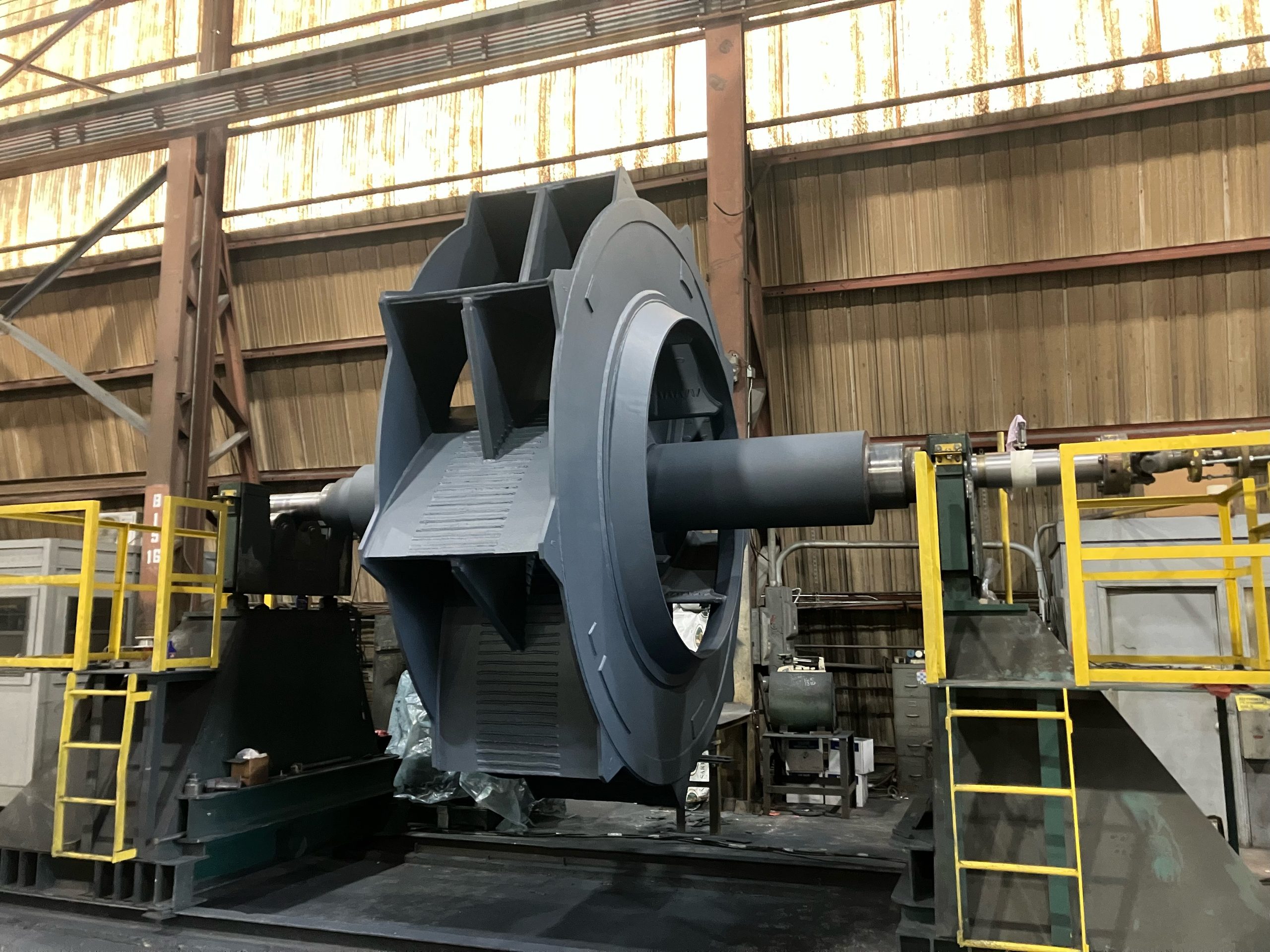
Industrial fans play a central role in keeping heavy manufacturing facilities operating safely and efficiently. In pulp and paper, cement, steel, and energy production, these massive machines drive airflow, support combustion, and stabilize entire systems.
In this episode of Powering the Process, host Jen Little talks with Mike Piazza, Director of Air Handling at ProcessBarron, about how fan rotors are engineered, maintained, and rebuilt to keep plants running without interruption.
Why Industrial Fans Matter in High‑Demand Environments
Industrial fans act as the core of air movement inside large‑scale facilities. As Mike explains, they function like a heart; pushing air and gas through systems that depend on consistent flow. Fans support:
- System evacuation
- Combustion air movement
- Draft control
- Overall airflow stability
When a fan is undersized or poorly matched to its application, plants experience higher power consumption, reduced efficiency, and operational limitations. Reliability is equally critical, as fan failures lead to forced outages and costly production losses.
ProcessBarron’s Role in Industrial Air Handling
ProcessBarron designs, manufactures, installs, and maintains fan rotors for a wide range of industrial applications. Because every plant operates differently, each rotor is engineered to match its specific process conditions.
The company’s capabilities include:
- Custom rotor engineering
- Fan performance evaluation
- Application‑specific design selection
- Reverse engineering of existing rotors
- Emergency rebuilds and replacements
- Full inspect‑and‑advance services
This approach ensures that each fan rotor is built to meet the exact demands of its operating environment.
How Fan Rotors Are Designed for Real‑World Conditions
Fan rotor design begins with understanding the system’s performance requirements, including volume, pressure, temperature, and the type of material moving through the airstream.
ProcessBarron receives two types of information:
- Predicted design data from engineering firms
- Actual field measurements from existing equipment
Using fan curves, software tools, and decades of experience, the team selects the correct fan style for the application. Dirty or abrasive environments require heavier construction and armored components, while clean‑air systems allow for lighter, more efficient designs.
Materials Used in Rotor Construction
Fan rotors are built from materials selected to match the stresses and conditions of the application. Mike notes that ProcessBarron commonly uses:
- 50 ksi minimum strength material
- 100 ksi high‑strength material for demanding loads
- Various alloys and stainless steels for corrosive or specialized environments
Their welders are trained to work with a wide range of materials, allowing rotors to be fabricated for virtually any industrial setting.

Challenges in Upgrading Existing Equipment
Many plants operate equipment that has been in service for years, and changes in process conditions often require rotor modifications. Adding a wear plate or reinforcing components isn’t a simple task, engineers must ensure that the added weight and inertia do not compromise:
- Rotor integrity
- Shaft performance
- Motor startup behavior
These upgrades often require re‑engineering the entire rotating assembly to maintain safe operation and extend equipment life.
What Happens During the Inspect & Advance Process
With thousands of rotors in service, ProcessBarron regularly receives equipment for evaluation. The inspect‑and‑advance process includes:
- Cleaning and sandblasting
- Shaft runout measurement
- Journal inspection
- Magnetic particle or dye penetrant testing
- Blade and component wear assessment
After inspection, the team provides a detailed proposal outlining the necessary repairs or rebuild options. Rotors from any manufacturer can be reverse‑engineered, repaired, or completely remanufactured.
Responding to Emergency Fan Failures
When a fan rotor fails unexpectedly, and no spare is available, plants face immediate downtime. Mike explains how ProcessBarron responds quickly:
- Rapid reverse engineering
- Around‑the‑clock fabrication shifts
- Stocked materials and forgings
- Fast turnaround on drawings and shop routing
This fast response capability has been part of the company’s identity since its earliest days in fan repair and rebuild work.
The Most Common Rotor Issue: Bearing Failure
The most frequent problem seen in the shop is bearing‑related damage. Poor bearing maintenance leads to shaft wear and rotor failure. Regular preventive maintenance, especially bearing inspections, helps avoid costly downtime.
Failures often occur during peak production periods, making proactive maintenance even more important.
Technology Advancements Improving Fan Reliability
Modern computational tools allow engineers to:
- Model airflow behavior
- Predict wear patterns
- Validate performance improvements
- Design new rotors for existing housings
Wireless vibration and temperature sensors now provide real‑time equipment data directly to handheld devices, giving operators immediate insight into fan performance.
Safety Innovation: The ProcessBarron Safety Brake
One of the newest developments in air handling is the Safety Brake, a system that allows operators to:
- Slow fans quickly
- Stop rotors completely
- Lock the equipment to prevent freewheeling during maintenance
This device is especially useful in applications where multiple fans operate in parallel, such as steel industry systems.
Where Fan Technology Is Heading
While the core principles of fan design remain consistent, new monitoring tools and computational modeling continue to improve reliability, efficiency, and predictive maintenance capabilities.
A Customer‑Focused Engineering Culture
Mike describes ProcessBarron as a company built on customer service, quick response, and long‑term relationships. The team operates with a “big company, small company feel,” emphasizing communication, partnership, and understanding each customer’s operational needs.
Why Reliable Fans Keep Plants Running
Industrial facilities rely on:
- Stable airflow
- Durable fan rotors
- Preventive maintenance
- Fast emergency support
- Application‑specific engineering
As industries evolve, partnering with experienced air‑handling experts ensures plants remain safe, efficient, and productive.
Contact a ProcessBarron sales representative near you.