
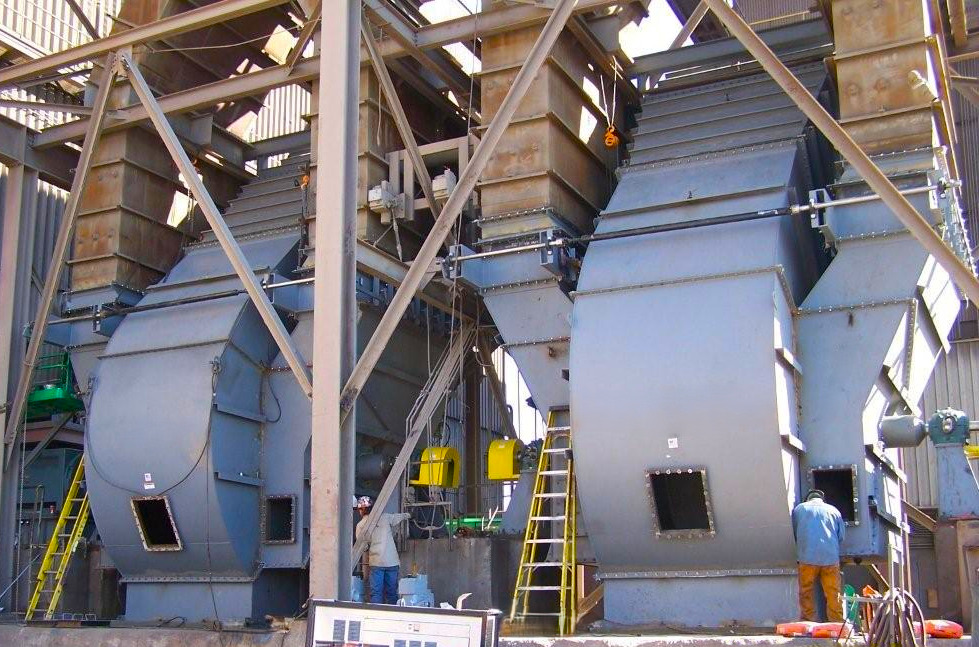
Forced outages are more than unexpected downtime, as they can lead to lost production, emergency repair costs, safety concerns, and long-term equipment damage. Ashley Doyal, Vice President of Sales – South Region at ProcessBarron, explains why many forced outages are preventable and how condition monitoring, preventive maintenance, and early intervention can help industrial facilities identify problems before they become catastrophic failures.
Understanding Forced Outages
From an operational perspective, a forced outage occurs when an unexpected equipment failure forces a mill or industrial facility to reduce capacity or shut down. Unlike a planned outage, it gives maintenance and operations teams little time to prepare, secure parts, or schedule repairs around production needs.
The most common causes often involve fans and other rotating equipment that operate around the clock. Bearing failures, lubrication issues, fan imbalances, and damaged damper linkages can all interrupt production. A failed damper linkage may cost only a few hundred dollars to replace, yet it can bring an entire unit down or limit its capacity. The price of the part rarely reflects the full cost of its failure.
Fans, pumps, and other continuously operating equipment are especially vulnerable because speed, heat, load, and wear build over time. These assets require consistent preventive maintenance, including lubrication, vibration monitoring, and temperature checks. Doyal estimates that as many as 90 percent of forced outages could be avoided through proper preventive maintenance and monitoring.
The True Costs of Unplanned Outages
When calculating the cost of an outage, companies may focus on the failed component and lost production while overlooking damage to surrounding equipment. A bearing operating at an elevated temperature, for example, can experience lubricant breakdown and eventual failure. “If it stays above 180 degrees, it is eventually going to fail,” Doyal explains. Monitoring these changes allows facilities to schedule a short outage and replace the bearing before it damages the shaft, which is an issue that would require significantly more time and money to repair.
Emergency work also carries costs that are less common during a planned outage. Facilities may pay for expedited materials, overtime labor, travel, and immediate technical support while production remains offline. Depending on the facility, lost productivity alone can reach hundreds of thousands of dollars per day.
Doyal compares preventive maintenance to an insurance policy. A facility may decide against spending approximately $50,000 on planned maintenance, only to experience a fan failure that keeps the unit down for seven to ten days. When the repair time and production losses are combined, that decision can lead to millions of dollars in total impact.
For example, ProcessBarron’s recommendation to a paper mill was to replace a worn impeller during a planned outage, but the mill chose to operate it for another year because the fan did not have a vibration problem at the time. Later, a plugged dust collector hopper allowed excess carryover, including sand, to wear the fan faster than expected. The fan experienced a catastrophic failure, and the boiler remained down for approximately ten days. Replacing the rotor during the planned outage might have delayed startup by one or two days, but it could have prevented the much longer forced outage.
The effects extend beyond the immediate repair. Maintenance and operations teams must redirect people and resources toward an emergency, often under pressure to restore production as quickly as possible. Repeated outages may also affect delivery schedules, customer confidence, and a facility’s reputation for reliability. They can raise safety concerns when known wear or maintenance needs are allowed to continue without action.
Preventive Maintenance: Finding Problems Before Failure
Rising vibration and bearing temperature are two of the earliest warning signs of a developing fan problem, but recognizing those warning signs requires consistent monitoring and timely maintenance. When budgets are reduced or planned work is postponed, organizations may overlook developing issues. A fan may appear to be operating normally when the unit shuts down, leading the team to assume it can run for another year. While this may save money during the current outage, it transfers the risk to the next operating cycle.
Companies can prioritize assets by considering which equipment can reduce capacity or stop production, then reviewing the condition of those critical components before a planned outage. Doyal recommends conducting an extensive online bearing analysis approximately one month to six weeks before shutdown. Analyzing the equipment while it is operating helps technicians identify developing issues and determine which bearings need closer attention once the outage begins.
Condition monitoring supports this process by showing changes in vibration and temperature over time. A sudden event can still cause an immediate failure, but trend data usually gives teams an indication that a problem is developing. Facilities can then coordinate a short repair with an existing production window rather than waiting for the equipment to fail.
An effective preventive maintenance inspection examines the complete fan assembly. Technicians measure bearing tolerances and compare them with manufacturer recommendations, inspect coupling grease and coupling gaps, check inlet cone clearances, look for leaks in expansion joints, verify damper linkage alignment, and stroke the dampers to confirm proper operation. Each finding should be documented so the team can compare conditions over time.
The best way to balance maintenance spending is to compare the cost of inspection and a planned repair with the potential duration and production impact of a forced outage. Replacing a bearing from stock may take 12 to 24 hours. Replacing a damaged shaft can take several days. Looking at the full consequence of failure makes it easier to determine where preventive maintenance provides the most value.
Leveraging Data to Prevent Repeat Failures
Historical outage and maintenance data can help organizations identify recurring problems, but teams must look beyond the component that failed. If a facility repeatedly replaces a worn fan or problem.”
Fan wear may point to an upstream system issue. The mechanical dust collector may be improperly sized or may not be capturing particulates 10 microns and larger. Sand and similar material can then pass through the system and gradually sandblast the fan. Reviewing the entire system helps the facility correct the source of the wear instead of repeatedly repairing the same result.
Sensors and real-time monitoring make changes easier to detect while equipment is running. Predictive analysis of that data can help teams recognize a worsening pattern and act before an alarm becomes an outage.
Connecting maintenance records with production and financial data gives leadership a clearer view of risk. The number of hours offline, capacity lost, labor required, expedited costs, and production value affected show whether a maintenance decision saved money or simply deferred a larger expense. This information also helps teams justify attention to assets with the greatest operational consequences.
How Leadership Can Help Prevent Forced Outages
Technology cannot prevent forced outages if employees do not understand the information it provides. Operators need training to recognize critical alarms, interpret trend data, and communicate changes before equipment reaches a failure point. Maintenance and engineering employees also need a working knowledge of the equipment and the larger systems around it.
Leadership can make the case for proactive maintenance by comparing the cost of planned work with the probable cost of failure, including lost production, outage duration, emergency labor, expedited parts, and secondary equipment damage. Tracking metrics such as forced outage frequency and duration, planned versus unplanned maintenance hours, repeat failures, changes in vibration and temperature, completed maintenance, and downtime-related production losses can show whether the program is detecting issues earlier and reducing the impact of failure. Together, these factors help decision-makers view maintenance as an investment in long-term reliability rather than an isolated expense.
A company that wants to reduce forced outages over the next 12 months should begin by identifying its most critical rotating assets and reviewing their recent maintenance and failure histories. From there, the facility can establish baseline vibration and temperature data, schedule operating-condition assessments before planned outages, keep critical replacement parts available, complete thorough preventive maintenance during shutdowns, and train employees to respond appropriately to warning signs. After every forced outage, teams should also determine whether it could have been prevented and use the answer to address missed warning signs, maintenance gaps, training needs, or system-level problems before the next operating cycle.
A Proactive Partnership for Outage Prevention
ProcessBarron works alongside industrial facilities as a trusted partner in proactively improving equipment reliability by evaluating critical fan and air-handling equipment, identifying developing problems, and recommending repairs before those issues cause unplanned downtime. Through close collaboration with facility teams, its technical sales and engineering experts bring the system-level knowledge needed to assess equipment condition, prepare for planned outages, and develop maintenance strategies tailored to each facility’s most critical assets and operational needs.
When an unexpected failure does occur, ProcessBarron can assess the damage, determine the work required, and help restore operation. Depending on the facility’s location and travel requirements, technical personnel may be available onsite within 24 to 48 hours.
Reduce the risk of your next forced outage with a maintenance and monitoring strategy designed around your facility’s critical equipment. Contact ProcessBarron today for expert support with equipment assessments, preventive maintenance, and emergency response. Handle Everything Better.