
When critical equipment fails, the impact can extend across an entire plant. A damaged fan, failed shaft, or broken component can interrupt the larger system it supports, slowing production or bringing it to a stop. For plant managers and maintenance teams, the immediate priority is getting that system running safely again.
Russell Powell, ProcessBarron’s Sales Director for the Eastern Seaboard, understands that urgency. Drawing on roughly 45 years of industry experience, he explains that lost production can cost facilities anywhere from a few thousand dollars to $100,000 per hour, depending on the operation. Those losses are separate from the cost of repairing the equipment.
The first 24 hours help establish the direction of an emergency response: assessing the failure, coordinating resources, and determining a practical path toward recovery. The exact timing varies with equipment access, travel, parts availability, and repair complexity. Some repairs can be completed within hours; others require several days. Throughout that process, multiple activities often move forward at the same time.
The First Call: Assessing Critical Equipment Failure
Critical equipment is defined by its role in production. A failure does not have to shut down the entire plant to warrant an urgent response. Equipment that hinders output can also require immediate attention.
For ProcessBarron, the response begins with a conversation. According to Powell, emergency calls are typically answered by the regional manager who serves the customer’s area. That initial discussion helps establish what has happened, how severely production is affected, and which resources may be needed.
Verbal descriptions and photographs can give the team an early understanding of the damage. When the problem is inside equipment that cannot yet be opened or inspected, ProcessBarron develops a plan for on-site assessment alongside the potential repair approach.
Depending on the situation, an experienced director, technical services manager, or engineer may be dispatched to evaluate the equipment. The decision considers who can arrive promptly and provide the expertise the situation requires.
At the same time, the plant prepares safe access. Equipment may need to be shut down, locked out and tagged out, and allowed to cool before work can begin. That preparation can take hours or longer, depending on the system. Coordinating those requirements early helps align the response with the facility’s readiness.
Mobilizing Emergency Repair Crews and Replacement Parts
Once the team has an initial understanding of the failure, mobilization begins. Two factors often shape the response: getting the right people and tools to the site, and securing the parts needed to complete the work.
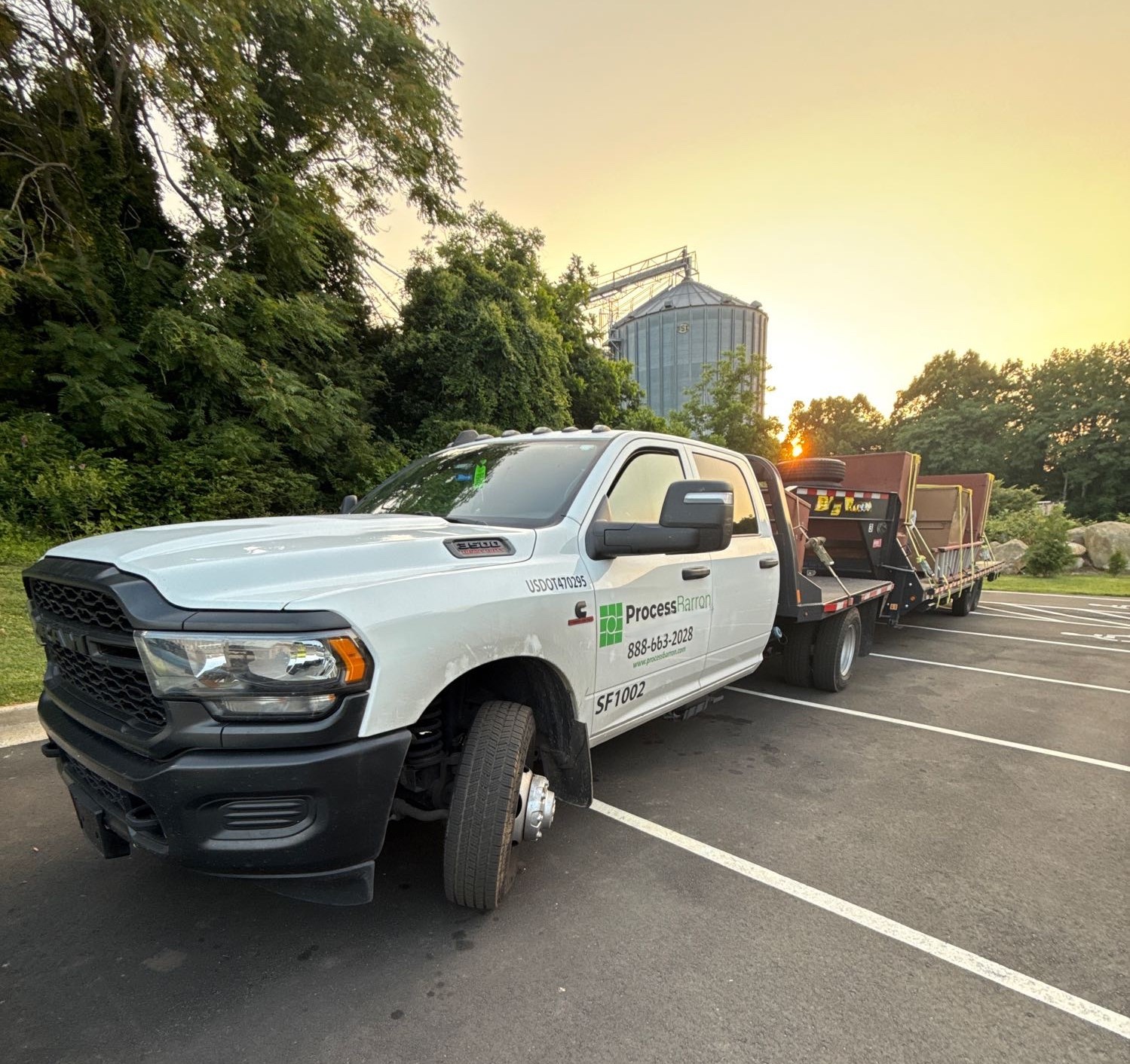
Powell explains that travel can take several hours, especially when a field crew must bring a tool trailer. Meanwhile, parts planning moves forward so the crew can work toward installation as components become available.
ProcessBarron’s field services, technical support, engineering, and manufacturing capabilities support that coordination. For equipment the company supports, damaged components can be manufactured as part of the emergency response.
If ProcessBarron did not originally supply the equipment and the necessary information is unavailable, an engineer may need to take field measurements. Those measurements are sent back to the manufacturing team so production can begin. Finished parts can then be expedited from ProcessBarron’s Pelham, Alabama, facility to the job site.
The regional manager typically coordinates the initial response, communicating the customer’s needs, expectations, and timing across the teams involved. Once work is established on site, the superintendent may communicate directly with the office about parts, lifting requirements, and other logistics.
“We’ll stay with the problem from the first phone call till it’s back up and running successfully,” Powell says.
On-Site Troubleshooting: Finding the Root Cause
The conversations that happen during mobilization often give ProcessBarron a strong indication of what has failed. On-site evaluation confirms that understanding and examines why the failure occurred.
Working with the customer, the team reviews visible damage and retraces the sequence of events leading up to the problem. Broken, bent, or overheated components provide clues, while observations from plant personnel help explain what changed before the equipment stopped working properly.
“There’s always a root cause, and that’s what we go after in parallel,” Powell explains.
That investigation informs both the immediate repair and the steps needed to reduce the risk of recurrence. The underlying issue may involve mechanical damage, operating conditions, or maintenance practices. Addressing it can require collaboration with the plant’s operations and maintenance teams.
An ongoing customer relationship also supports troubleshooting. Familiarity with a facility gives ProcessBarron insight into how its equipment has historically performed and how the larger process operates. That background helps the team assess the failure and recommend appropriate corrective action.
Choosing a Temporary or Permanent Equipment Repair
Repair planning begins during the initial assessment and continues as the team learns more on site. The approach depends on the damage, equipment condition, available parts, cost, and time required to restore production.
When a permanent repair can be completed within a similar timeframe and at a comparable cost to a temporary solution, replacing the damaged part may be the practical choice. In other cases, manufacturing a new component or assembly takes considerably longer.
A temporary repair may provide a path back to production while the team prepares a permanent solution for a scheduled outage. Powell describes situations where aging equipment can be repaired to resume operation, with replacement planned once the customer has time to budget and schedule the work.
The assessment may also reveal that the equipment’s original design no longer matches the plant’s operating demands. A system installed decades earlier may now be supporting significantly more production. In that situation, a lasting solution can require an upgrade that needs additional engineering and planning.
The goal is to give the customer a clear understanding of the immediate repair and any work still needed to support long-term reliability.
Maintaining Safety Throughout Emergency Repair Work
Safety planning begins before dispatch and continues throughout the repair. Access requirements, elevated work, lifting operations, atmospheric conditions, and personal protective equipment all influence how the job is prepared and performed.
ProcessBarron coordinates with the facility’s operations and safety teams to establish safe working conditions. Depending on the crew size and scope, a safety representative may accompany the team, while trained superintendents oversee crew safety on site.
Experienced supervision also matters during disassembly. Moving large components and opening equipment require an understanding of the next step and the hazards it may introduce. As work progresses, the crew continually evaluates conditions and prepares for subsequent tasks.
That ongoing coordination supports safe execution even when the pressure to restore production is significant.
Testing, Commissioning, and Returning Equipment to Service
Completing the repair is followed by startup checkout and commissioning. Before equipment is energized, the team inspects it and confirms that it is ready for startup.
“Once we deem it is in proper working condition and ready for startup, we’ll work with operations at the plant and maintenance to actually start the equipment up,” Powell says.
The team then monitors performance and makes any necessary adjustments, including balancing where required. ProcessBarron and plant personnel work together to confirm satisfactory operation before the equipment is released back to operations.
The larger system can influence how long validation takes. A repaired fan may start immediately, while the boiler or furnace it supports may require eight to 24 hours to reach operating temperature and load. Full evaluation of the repaired component may depend on that broader startup process.
Rushing these steps can lead to additional problems and another shutdown. Allowing time for proper checks and adjustments helps protect the repair and the plant’s recovery.
After the Emergency: Planning for Greater Reliability
Once production resumes, follow-up turns the emergency into useful information for future maintenance and planning. Powell explains that the regional manager typically returns within days or the following week to review the symptoms, failure, repair, and recommended next steps.
Those recommendations may include operational changes, maintenance education, equipment improvements, or replacement planning. If a temporary repair was completed, follow-up also helps establish the path toward a permanent solution.
Facilities can improve readiness through proper equipment upkeep, recommended spare parts, and regular inspections during scheduled downtime. Knowing how equipment should perform helps plant teams recognize when it is moving outside its intended operating range.
For aging equipment, Powell recommends beginning replacement conversations two or three years ahead when possible. Early planning gives facilities time to incorporate those costs into capital budgets and coordinate installation.
Partner with ProcessBarron
ProcessBarron stands apart by bringing field services, technical support, engineering, and manufacturing together under one roof. Backed by experienced teams and efficient operations that help keep pricing competitive, these capabilities support a coordinated response from initial assessment through successful startup. Ongoing maintenance support and proactive replacement planning extend that partnership beyond the immediate repair, helping facilities strengthen long-term reliability. Prepare your facility with an experienced partner for emergency repairs and ongoing equipment needs. Contact ProcessBarron today for expert support before, during, and after an equipment failure. Handle Everything Better.